Moon
Moon Phases in Astrology
The eight lunar phases from new moon to balsamic moon: waxing, waning, emotional tides, and timing in everyday life.
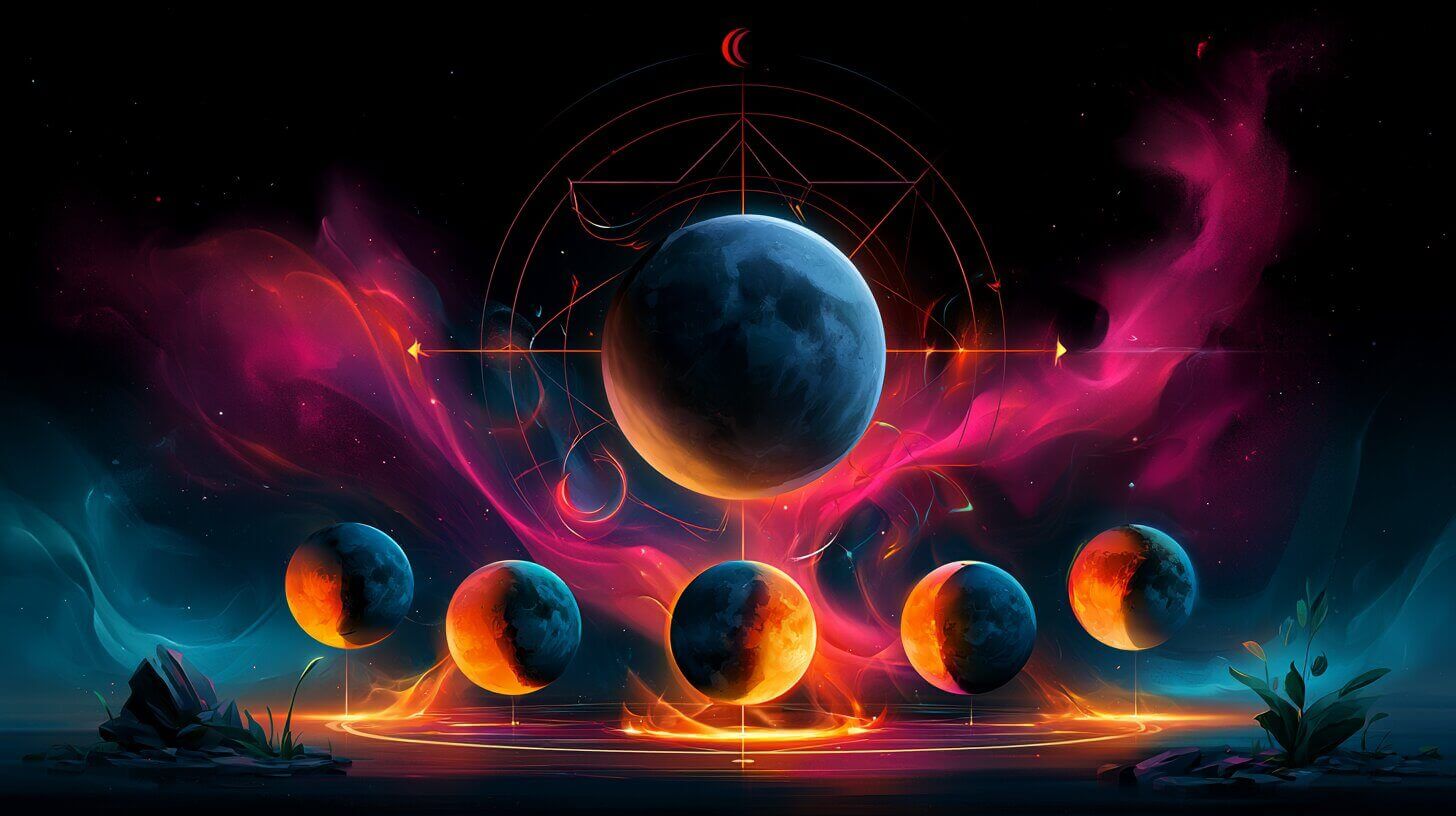
The Moon completes a full cycle about every 29.5 days. From Earth we see its lighted portion grow, peak, and shrink: the familiar rhythm of waxing (increasing light) and waning (decreasing light). In astrology, each phase carries a distinct mood for intention, emotion, and timing.
Western astrology often works with eight lunar phases, not only new and full. Together they describe a monthly story: seed, push, adjust, refine, illuminate, share, release, and rest before the next cycle begins. The transiting Moon is not the same as your natal Moon, but both matter. Your birth chart shows where monthly lunations land house by house; your moon sign describes your emotional baseline.
Waxing and Waning
Waxing moons run from new moon toward full moon. Light increases, momentum builds, and many people feel more motivated to start, pitch, and grow what matters. Waning moons run from full moon back toward new. Light decreases, and the emphasis shifts toward completion, editing, and letting go.
Neither half is "better." Waxing favors outward action; waning favors reflection and closure. Tracking the phase helps you match effort to the sky instead of fighting the tide. Pair phase awareness with your horoscope for personal nuance and with zodiac seasons for the Sun's monthly backdrop.
New Moon
The new moon occurs when the Sun and Moon align in the same sign: a reset point for intentions, quiet starts, and fresh cycles. Energy tends inward. This is the seed moment of the month, best for private planning rather than loud launches. Read our full new moon guide for timing tips, intention-setting, and how your moon sign colors the experience.
Crescent Moon
A few days after the new moon, a visible crescent appears. Energy rises, but obstacles also show up. Schedules tighten, doubts surface, or first attempts need revision.
The crescent phase is about persistence. Protect fragile ideas, take small steps, and adjust without abandoning the goal. Think of it as the shoot breaking through soil: growth is real, but the environment still tests it. This is a good window for habit anchors, not for public proof.
First Quarter Moon
At first quarter the Moon is half-lit and waxing. This is a decision point. Something in your project, habit, or relationship may need a clear choice or boundary.
Tension here is productive. Commit to a direction, resolve a conflict, or cut what will not support the next stage. First quarter moons often ask for courage more than perfection. If you set intentions at the new moon, first quarter is when you find out whether they survive contact with real life.
Gibbous Moon
The gibbous phase sits between first quarter and full moon, nearly full, still refining. Details matter. Edit, troubleshoot, and improve what is already in motion.
This is excellent timing for polish and preparation: rehearse, proofread, organize, and strengthen systems before the full moon brings things into the open. Gibbous weeks reward quality control over new starts.
Full Moon
At full moon the Sun and Moon oppose each other: peak illumination, heightened emotion, and culmination. What was seeded at the new moon often becomes visible now, for better or for clearer. Read our full moon guide for release practices, relationship clarity, and working with lunar eclipses.
Disseminating Moon
After the peak, the waning gibbous or disseminating phase turns attention outward. Share results, teach what you learned, and distribute knowledge or resources.
This is a social, generous part of the cycle. Good for collaboration, feedback, and passing information on. It is less about launching and more about communicating value. Mentoring, publishing drafts, and generous follow-up fit this phase well.
Last Quarter Moon
Last quarter is another half-moon, now waning. It marks a structural review: what habit, commitment, or obligation no longer fits?
Take responsibility for loose ends. Finish tasks, update records, and make practical cuts. This phase supports honest accounting more than new beginnings. Last quarter is the monthly equivalent of clearing desk space before the next cycle.
Balsamic Moon
The balsamic moon is the final sliver before the next new moon, a deep waning phase. Energy turns inward. Rest, reflect, and release what the month will not carry forward.
Journal, meditate, simplify your calendar, and allow space for the unknown. The cycle closes here so the next new moon can begin with a cleaner slate. Balsamic days favor rest over hustle and listening over pitching.
Using Moon Phases in Daily Life
You do not need perfect timing for every task. A simple approach: initiate and promote during waxing moons; edit, complete, and rest during waning moons. Note which house each lunation activates in your natal chart for personal emphasis that changes every month.
During eclipse season, new and full moons can carry extra charge. Treat those windows with a little more flexibility and a little less reactivity. For deeper lunar symbolism in your personality, explore moon signs and how your natal Moon differs from the current sky.
A lightweight monthly practice: mark the new and full moon dates, write one intention at new moon, review it at full moon, and release one item at last quarter or balsamic. That alone connects you to the eight-phase rhythm without turning astrology into a rigid schedule.
Eight Moon Phases at a Glance
| Phase | Cycle | Best for |
|---|---|---|
| New moon | Waxing start | Intentions, quiet starts, private planning |
| Crescent | Early waxing | Persistence, small steps, habit anchors |
| First quarter | Waxing decision | Clear choices, boundaries, course correction |
| Gibbous | Late waxing | Polish, rehearsal, quality control |
| Full moon | Peak | Culmination, visibility, release, clarity |
| Disseminating | Early waning | Sharing results, teaching, feedback |
| Last quarter | Waning review | Finishing tasks, practical cuts, accounting |
| Balsamic | Pre-new | Rest, reflection, release before the next cycle |
The waxing half builds toward the full moon; the waning half integrates and clears. If you only track two dates each month, new and full moon still give you a usable rhythm. Add first and last quarter when you want finer pacing for decisions and cleanup.
Our approach
How we write astrology guides
Astrologylo uses the Western tropical zodiac and standard natal chart conventions unless a page states otherwise. Guides combine traditional symbolism with plain-language interpretation for self-reflection. For calculated placements such as moon, rising, or exact house cusps, use our birth chart calculator. Pair planet meanings with compatibility reports when comparing relationship patterns.
See the full editorial methodology for scoring standards, update practices, and entertainment disclaimer.