Minor Arcana • Swords
Five of Swords Tarot Meaning
In short
The Five of Swords is a Swords card. Upright, it warns of hollow victory: winning an argument while losing trust, so conflict may leave resentment even for the winner. Consider whether being right matters more than connection. Reversed, making amends, walking away from a toxic debate, or refusing further humiliation. Peace becomes possible when ego steps down.
Overview
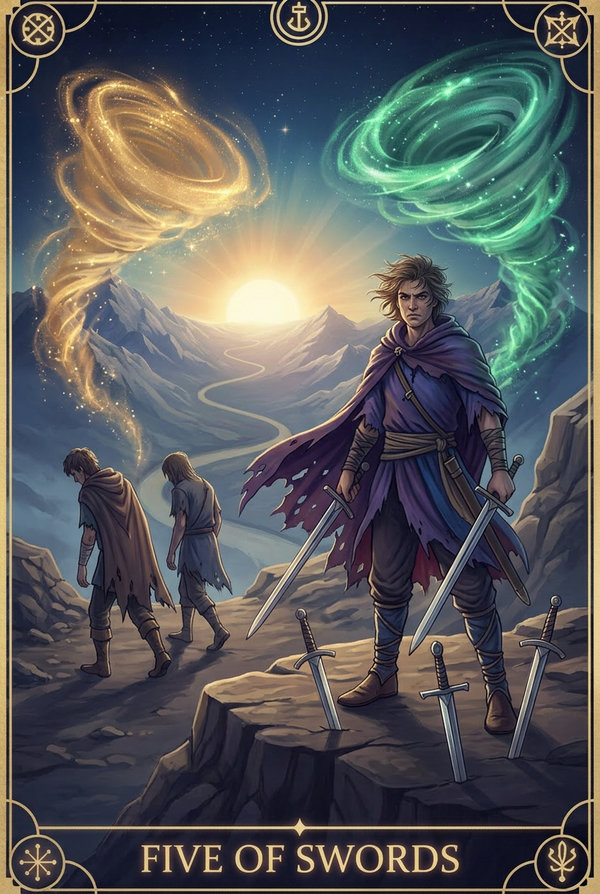
The Five of Swords tarot meaning is hollow victory: winning a fight in a way that quietly costs trust and connection. In the Rider-Waite-Smith scene, a smirking man gathers three swords against his shoulder while two more lie on the ground, and two defeated figures walk away beneath a ragged, wind-torn sky. As the 5 of Swords, it captures conflict where being right may matter less than the wreckage left behind. Upright, expect arguments you later regret, pyrrhic lawsuits, office politics, gossip, or intellectual bullying that leaves resentment even for the winner. Reversed, the mood shifts toward making amends, walking away from a toxic debate, or refusing further humiliation, so ego can finally step down. Either way, the card does not forbid self-defense; it warns against savoring another person's defeat, and asks whether this victory is truly worth the relational damage.
Five of Swords Keywords
Use these themes as quick anchors when Five of Swords appears in a spread. Upright tags summarize the card's core message; reversed tags show the blocked or inverted form.
Upright Keywords
- conflict
- hollow victory
- defeat
- tension
- self-interest
Reversed Keywords
- amends
- walking away
- released grudges
- ended hostility
- reconciliation
Upright & Reversed
Upright Meaning
Five of Swords upright warns of hollow victory: winning the argument while losing the trust that mattered more. A smirking figure gathers fallen blades as others walk away defeated, and the mood is conflict where the scoreboard costs the relationship. You may be technically right and still end up alone with your point. In practice it looks like a debate you win but regret, office politics that leave scars, or a cutting remark that ends a disagreement and the goodwill along with it. Before you press for total victory, ask whether being right matters more than staying connected. This card does not forbid defending yourself, but it warns against savoring someone else's defeat. Choose your battles, and notice when winning would poison what you actually want to keep. Sometimes the strongest move is to lower the sword, name the tension honestly, and protect the bond rather than proving a point that changes nothing.
Reversed Meaning
Reversed, the aftermath of conflict turns toward repair or release. You may be ready to apologize, to walk away from a toxic argument that leads nowhere, or to refuse further humiliation from someone who fights dirty. The ego that needed to win starts to step down, and peace becomes possible again. Sometimes the card shows lingering resentment instead, with old grudges quietly festering long after the fight ended. In practice it looks like extending an olive branch, choosing not to reply to bait, or finally leaving a dynamic where every exchange becomes a battle. Decide whether this relationship is worth rebuilding or better left behind. If it is, make genuine amends rather than a hollow gesture. If it is not, exit with your dignity intact instead of trading blows. Either way, stop collecting blades that will only cut your future collaborations. Integrity outlasts any single argument you could win.
Symbolism on the Card
- A smirking man clutches three swords against his shoulder and eyes two more on the ground, greedily claiming every blade of the abandoned field.
- Two other figures walk away with heads bowed and backs turned, defeated and dejected, the human cost of a win-at-all-costs fight.
- The victor's sly grin reveals arrogance and contempt, exposing a triumph that feeds ego while poisoning any real, lasting relationship.
- Ragged, torn clouds streak the sky in jagged shapes, the atmosphere unsettled and stormy even though the battle is technically over.
- Choppy grey-green water sits along the distant shore, mirroring the moral unease and lingering turbulence that follows a hollow conquest.
- The scattered, unclaimed swords on the ground show that not everything can be seized, and some things are lost in the winning.
- The distant figure who slumps in visible grief marks collateral damage, reminding that debate victories can wound people who never fought back.
Deeper Meanings
Personality Type
Someone in a Five of Swords phase can be sharp, competitive, and determined to come out on top, quick in an argument and slow to concede. At their best they are resilient and unafraid of confrontation, but the win-at-all-costs streak often leaves collateral damage. Reversed, the flaw either eases or festers: they may finally see the loneliness their victories cause and start making amends, or they double down, playing the wronged victim while quietly picking the next fight to prove a point.
Spiritual Meaning
Spiritually the Five of Swords asks what your victories actually cost, and whether being right is worth being disconnected. The lesson is humility: not every battle is yours to fight or win. Reversed, growth stalls when you cling to old grievances or replay conflicts in your head, so return to one grounding practice, release the need to dominate, and let peace matter more than the point.
Health & Wellness
For health the Five of Swords can reflect the toll of conflict and stress, the tension that lingers in the body after a fight. Upright, notice how strain and resentment tighten muscles or disturb rest. Reversed, letting go of a draining battle brings real relief, so ease stress through calm routines rather than replaying the argument. Always seek professional care for any real concern.
Shadow Side
The shadow of the Five of Swords is the hollow win: dominating, belittling, or being right at the expense of everyone around you. It can also hide as playing perpetual victim to justify the next fight. Reversed, watch for the trap of clinging to conflict long after it should have ended. Repair begins with one honest boundary, a genuine apology where owed, and letting the ego stand down.
Timing
The Five of Swords marks a turbulent stretch that passes once the lesson lands and the ego steps back, often within days rather than a long season. Tension eases as soon as someone chooses peace over point-scoring. Reversed, delays mean a conflict is being dragged out or replayed, so the theme keeps returning until you finally make amends or simply walk away.
Love & Career
In Love & Relationships
Upright
Conflict here has a winner and a loser, and winning the argument may cost the connection. Watch for a partner who belittles you or fights to dominate rather than resolve. Ask whether being right matters more than being close. If respect has genuinely gone, walking away is the healthier victory, because pride kept warm only breeds more resentment.
Reversed
Ego steps down and peace becomes possible: mutual accountability after a fight, or choosing connection over proving a point. You stop the humiliation cycle and make amends. Some battles simply are not worth it, and releasing the need to win is what finally repairs trust.
Career & Finances
Upright
Hostile competition, stolen credit, or a win-at-all-costs atmosphere surrounds you. Document your work and protect your reputation, because the loudest victory can leave you isolated. Sometimes refusing to fight, or quietly walking away, is the real strength. Weigh whether this contest is worth the trust and goodwill it burns.
Reversed
Mediation succeeds, or you stop taking the bait from combative colleagues and defuse the tension. Making amends clears the air. Choose professional peace over another hollow win, and let the pointless rivalry lose your energy rather than command it.
As Feelings
The Five of Swords feels like winning and feeling worse. Emotionally there is tension, pride tangled with a hollow ache, the sense that being right cost more than it was worth. You might feel defensive, resentful, or alone after a conflict nobody truly won, with an urge to defend the ego as connection slips. Reversed, the feeling turns toward repair: a willingness to apologize, to walk away from a fight that only wounds, or to refuse further humiliation. Reversed can also mean carrying the sting of an old argument you never let go.
Yes or No
Lean toward no, because the Five of Swords warns that even a win here may cost you trust, goodwill, or peace, so ask whether the victory is worth what it breaks. Reversed, the answer improves as you step back from the fight, make amends, or refuse a hollow battle, so choosing connection over being right turns a costly yes into a wiser one.
General Advice
Ask yourself whether you want to win or to be whole. First, drop the need to have the last word, since it usually costs more than it gains. Second, if you were harsh, offer a genuine apology before pride hardens the rift. Third, walk away from any fight that only humiliates someone, including you. A victory that leaves you isolated is a defeat wearing a crown, so protect the relationship.