Minor Arcana • Swords
Three of Swords Tarot Meaning
In short
The Three of Swords is a Swords card. Upright, it pierces the heart with grief, betrayal, or painful truth, and the sorrow is real, so naming it is where healing begins. Reversed, it brings recovery from heartbreak, forgiveness, or the release of recurring mental pain. Scars remain, yet the suffering softens.
Overview
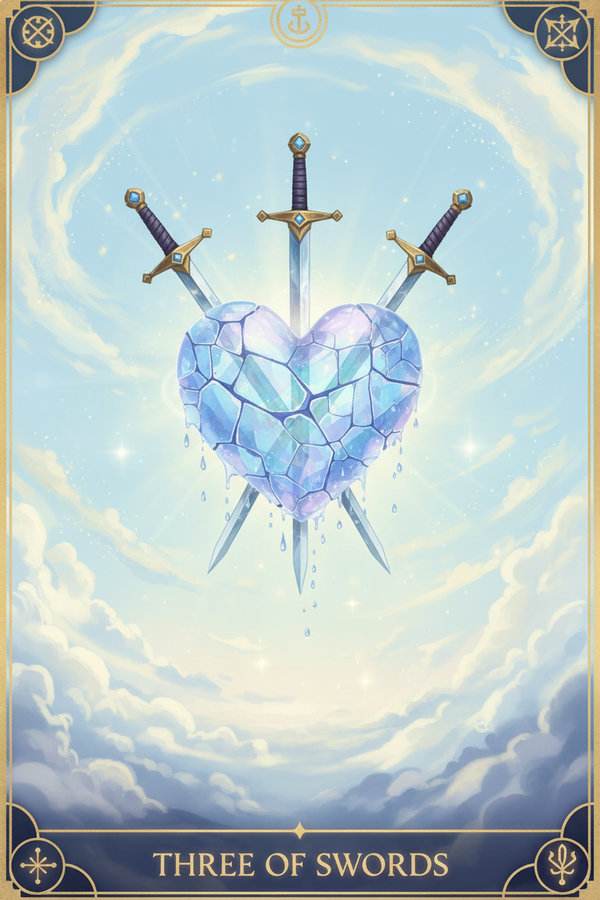
The Three of Swords tarot meaning is heartbreak named plainly: grief, betrayal, or a painful truth the heart can no longer avoid. In the Rider-Waite-Smith card, three long swords pierce a single red heart while grey storm clouds release steady rain across the whole background. As the 3 of Swords, it strips the scene of any figures, so the mind's stark narrative about loss dominates without melodrama. The image says the wound is real, and naming it honestly is where healing begins. Upright, expect a breakup, betrayal, hurtful words, a hard diagnosis, or grief that must be felt rather than bypassed. Reversed, the rain eases into recovery, forgiveness, or the slow release of looping mental pain, though scars remain and suffering only softens. Whether upright or reversed, the card asks you to mourn cleanly and let the storm clear the air.
Three of Swords Keywords
Use these themes as quick anchors when Three of Swords appears in a spread. Upright tags summarize the card's core message; reversed tags show the blocked or inverted form.
Upright Keywords
- heartbreak
- grief
- painful truth
- sorrow
- separation
Reversed Keywords
- healing heartbreak
- forgiveness
- released pain
- fading grief
- optimism
Upright & Reversed
Upright Meaning
Three of Swords upright pierces the heart with grief, betrayal, or a painful truth that can no longer be denied. Three blades cross a heart under grey rain, and the image is honest rather than cruel: the mind finally articulates a hurt the heart already felt. This is the breakup, the harsh feedback, the diagnosis, or the moment trust breaks and you cannot pretend otherwise. The sorrow is real and deserves to be felt, not rushed past with busywork or forced positivity. In practice it looks like reading a message that confirms your fear, sitting with a loss, or admitting a relationship or plan is over. As sharp as it is, naming the pain cleanly is where healing begins. Let yourself grieve, lean on people who can hold space, and resist the urge to numb it. The rain clears eventually, and clearer air waits on the other side of feeling this fully.
Reversed Meaning
Reversed, the rain begins to ease and recovery from heartbreak slowly starts. You may be forgiving someone, forgiving yourself, or finally releasing a pain you have replayed far too many times. Sometimes the card shows the opposite risk: clinging to old hurt, refusing to let a wound close, or reopening it every time healing seems near. Scars remain, but the suffering softens and stops running the whole show. In practice it looks like stopping the mental loop about a betrayal, deleting the reminders that kept the ache fresh, or choosing to move forward instead of nursing resentment. Be honest about whether you are healing or hiding. If grief is still raw, give it room rather than pretending you are fine. Talk it through, write it out, and let time do its quiet work. The goal is not to forget the hurt but to carry it lighter.
Symbolism on the Card
- Three straight swords pierce a single red heart from three angles, an image of pain articulated cleanly rather than blamed on any villain.
- The heart is drawn plump and vividly red, so loss registers as emotional and physical, not merely abstract or purely intellectual.
- Heavy grey storm clouds fill the sky behind the heart, the oppressive weather of grief pressing down over the entire background scene.
- Steady rain falls in visible streaks, suggesting tears and the slow, necessary release that eventually washes sorrow through.
- No human figures appear at all, so the viewer's own restless mind supplies the story of betrayal, breakup, or hard truth.
- The clinical, almost surgical layout keeps the card honest, validating heartbreak while refusing to romanticize or dramatize the suffering.
- The three blades converging on one heart evoke a triangle of hurt, often a painful third party, a harsh word, or a truth that came in threes.
Deeper Meanings
Personality Type
Someone under the Three of Swords often carries visible heartache and a hard-won honesty about pain, having learned that hiding it changes nothing. They can be tender, empathetic to others who suffer, and unafraid of difficult conversations, with a depth forged by having been cut before. Reversed, the flaw shows as nursing old wounds, replaying betrayals, and using past hurt as a reason to expect the worst, which keeps the heart guarded long after the danger has passed and blocks new closeness.
Spiritual Meaning
Spiritually the Three of Swords teaches that grief, faced honestly, becomes a doorway rather than a dead end. The lesson is to let sorrow be felt fully so it can be released instead of buried. Reversed, growth stalls when you either numb the pain or refuse to set it down, so return to one grounding practice and let compassion, especially for yourself, do the slow work of mending.
Health & Wellness
For health the Three of Swords often mirrors emotional pain in the body, showing up as a heavy chest, low energy, or grief that sits physically. Upright, gentle care and rest matter more than pushing through. Reversed, as the heartache eases, energy slowly returns, so support recovery with steady sleep, movement, and connection rather than isolation. Always seek professional care for any real concern.
Shadow Side
The shadow of the Three of Swords is identifying with the wound, wearing heartbreak as identity long after the event. It can also twist into inflicting the same pain you received. Reversed, watch for stubbornly holding grief, replaying the betrayal, and refusing the forgiveness that would free you. Repair begins by feeling the sorrow honestly, then choosing to set it down instead of guarding it forever.
Timing
The Three of Swords marks a painful patch that is real but not permanent, usually easing over the coming weeks as the sharpest grief passes. Healing here is gradual, not instant, so give it honest time. Reversed, recovery has already begun even if it feels slow, and lingering delays usually mean there is still sorrow left to feel and finally release.
Love & Career
In Love & Relationships
Upright
Sharp truth or genuine heartbreak surfaces here, whether betrayal, a third party, or words that sever trust. Do not minimize the pain, and let yourself grieve and name what happened honestly. Tears are part of clearing the air, not weakness. Facing the ache directly is what begins real healing, even when the relationship cannot go back to how it was.
Reversed
Healing follows a painful disclosure, and forgiveness slowly becomes possible if both people commit to repair. Recurring hurt starts to release its grip. Scars stay, but the sting softens. Choose therapy or honest talks over reopening the wound, and let recovery set its own pace.
Career & Finances
Upright
Disappointing feedback, a lost project, or quiet betrayal at work stings your pride. Feel it before reacting, and resist the urge for revenge. Naming the disappointment honestly lets you learn from it instead of carrying resentment. The cleared air, though painful, shows you exactly what to rebuild and whom to trust.
Reversed
Relief arrives as a team mends its culture, or you leave a toxic role and breathe again within weeks. Old workplace wounds begin closing. Process the hurt rather than nursing grudges, and let recovery guide your next practical move.
As Feelings
The Three of Swords is one of the most painful feelings in the deck: grief, betrayal, or a truth that pierces through the heart. It aches, and pretending otherwise only prolongs it. You may feel raw, disappointed, or hollowed out by words that severed something you trusted, and naming the hurt is where healing quietly begins. Reversed, the sharpest edge of the pain starts to dull: forgiveness becomes thinkable, recurring sorrow loosens, and you sense recovery even though the scar stays. Reversed can also mean clinging to old grief past its time.
Yes or No
No, or at least not yet. The Three of Swords names real hurt, and pushing forward now usually deepens the wound rather than heals it, so give the grief room first. Reversed, the answer begins to soften as the pain eases and you recover, so once you have genuinely processed the heartbreak, a cautious yes can return. Do not rush the timeline.
General Advice
Let yourself hurt honestly instead of performing that you are fine. First, name the specific loss out loud or on paper, because vague pain lingers the longest. Second, share it with one safe person so grief stops echoing alone. Third, remove or mute whatever keeps reopening the wound while it is still fresh. Healing is not forgetting, it is letting sorrow move through you so the scar can close.