Planets
The Moon in Astrology
Emotions, instincts, and inner needs. Your natal Moon sign and house describe comfort, memory, and belonging.
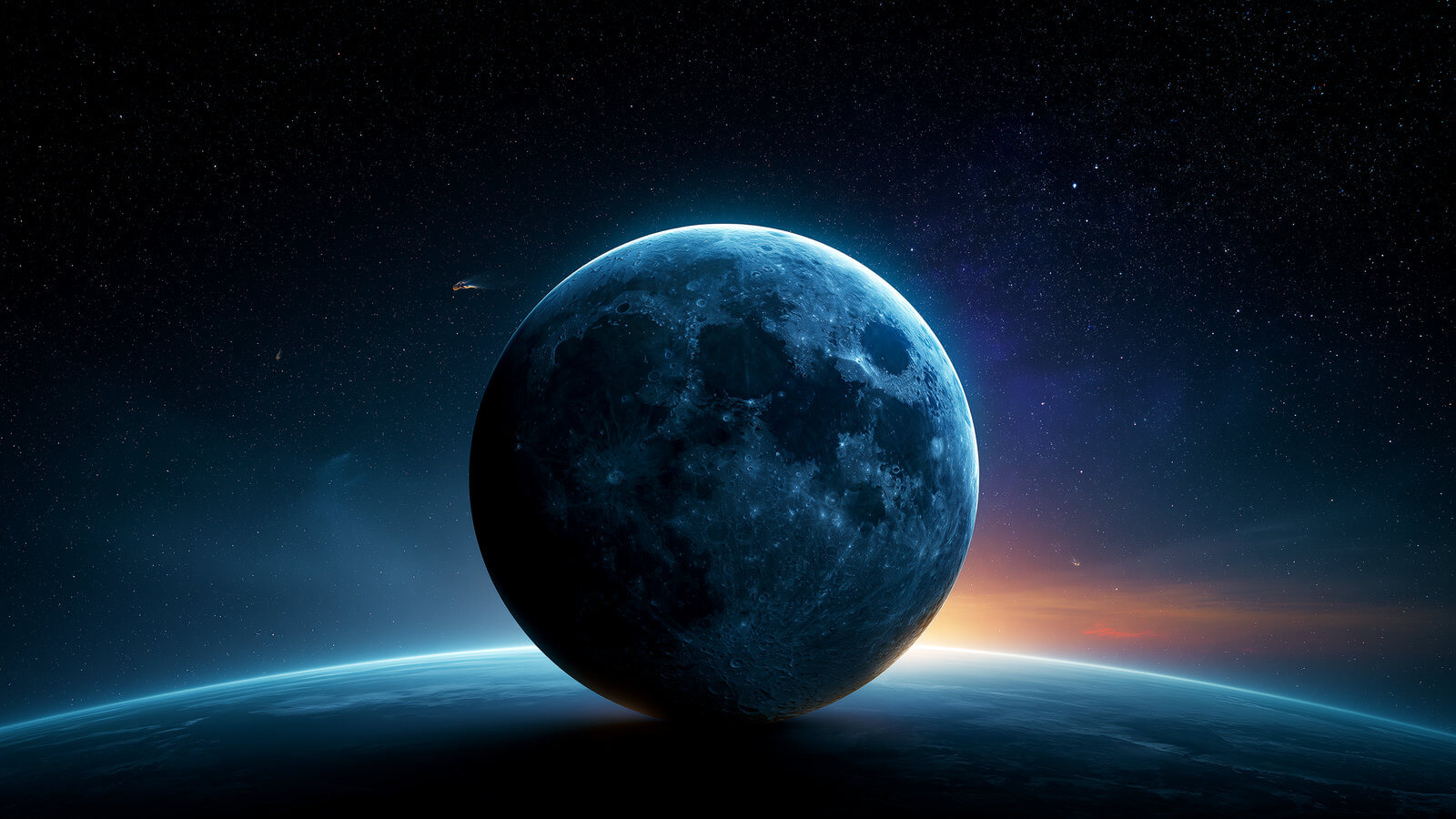
The Moon in Astrology
The Moon governs emotions, instincts, memory, and the need for safety: how you nurture and wish to be nurtured when the surface noise falls away. It changes signs every two to three days in the sky, describing the mood of the moment, while your natal Moon sign reveals your inner baseline.
The Moon rules Cancer and is linked with home, family rhythms, food, and the subconscious. It is the fastest-moving luminary and deeply personal. Where the Sun is who you are becoming, the Moon is what you need in order to feel like yourself.
As a luminary, the Moon represents the receptive principle: instinct, habit, and emotional memory. It complements the Sun's conscious will. Two people with the same Sun sign but different Moon signs often feel like entirely different personalities in private life.
Lunar phases add a monthly rhythm on top of sign changes: new, waxing, full, and waning moons mark cycles of initiation, growth, culmination, and release. Track them in our moon phases guide, including dedicated full moon and new moon pages.
To read the Moon in a full chart, combine the Moon sign (emotional style), the Moon house (where you seek comfort), and Moon aspects (how feelings mix with the rest of the personality). Dignity (exalted in Taurus, in detriment in Capricorn, in fall in Scorpio) describes style and effort required, not fixed fate.
The Moon in Astrology at a Glance
| Topic | Meaning |
|---|---|
| Luminary | The Moon |
| Rules | Cancer |
| Keywords | Emotions, instincts, memory, comfort, nurturing, belonging |
| Exalted | Taurus |
| Detriment | Capricorn |
| Fall | Scorpio |
| Cycle | ~2.5 days per sign; ~29.5 day lunar phase cycle |
Moon Keywords and Symbolism
Beyond sign and house placement, the Moon carries a consistent symbolic language across Western astrology. These associations help you recognize lunar themes in charts, transits, and everyday life, from nurturing and domestic rhythm to mood, memory, and the instinct to belong.
| Theme | Moon association |
|---|---|
| Core keywords | Emotions, instincts, memory, comfort, nurturing, belonging, habit |
| Strengths | Empathy, intuition, loyalty, adaptability, protective care |
| Challenges | Moodiness, clinginess, over-sensitivity, living in the past, dependency |
| Professions | Caregiving, hospitality, psychology, food, real estate, childcare |
| Body | Stomach, breasts, fluids, cycles, autonomic responses, digestion |
| Metal & color | Silver; white, pearl, and soft blue |
| Day | Monday (Lundi, Lunedì, named for the Moon) |
A strong Moon in the birth chart often shows as emotional intelligence, strong memory, and intuitive rapport with others. A challenged Moon (in fall or detriment, under heavy Saturn or Pluto aspects, or placed in the 8th house) may need more time to feel safe, process feelings, or trust that needs will be met. Neither is inherently good or bad; the sign, house, and aspects describe how lunar energy works in practice.
Moon by Element
Your Moon sign's element shapes how you seek comfort and express emotion. Fire needs action and honesty; Earth needs stability and tangible care; Air needs conversation and mental space; Water needs depth and emotional bonding. Read your Moon sign below, then explore the full profile in our moon sign guide.
Fire Moon
Aries, Leo, Sagittarius: direct, warm, and quick to react. Fire Moons process feelings through action and need space to cool off. Best outlet: movement, creative play, honest conversation without prolonged dwelling.
Earth Moon
Taurus, Virgo, Capricorn: steady, practical, and slow to trust. Earth Moons soothe through routine, food, and reliable presence. Best outlet: consistent habits, nature, quality time, tangible gestures of care.
Air Moon
Gemini, Libra, Aquarius: verbal, social, and mentally oriented. Air Moons need to talk feelings out and may detach when overwhelmed. Best outlet: journaling, dialogue, social connection, intellectual distraction with care.
Water Moon
Cancer, Scorpio, Pisces: deep, intuitive, and emotionally porous. Water Moons absorb atmosphere and need sanctuary to recharge. Best outlet: art, water, solitude, spiritual practice, trusted intimacy.
Moon Sign and House
Moon sign shapes emotional language: some signs need space to process (Air, Fire), others need closeness and reassurance (Water, Earth). Read your moon sign in our dedicated moon sign guide, with profiles for all twelve placements.
Moon house shows where you seek comfort and belonging. Moon in the 6th may soothe through routine; Moon in the 11th through friends and community; Moon in the 12th through solitude and spiritual retreat. Void-of-course Moon periods, when the Moon makes no major aspects before leaving a sign, are traditionally used for rest and reflection rather than major launches.
Moon conjunct the Ascendant often makes emotions visible on the face and in body language. Moon in the 4th house deepens ties to home and ancestry; Moon in the 10th may connect public reputation with emotional visibility. Read Moon aspects for the full picture: Moon trine Venus eases affection; Moon square Mars stirs reactive heat that needs healthy outlets.
The Moon and Sun Together
The Moon and Sun form the primary personality axis in most astrological practice. The Sun describes who you are becoming; the Moon describes what you need to feel safe along the way. Charts with the Sun and Moon in the same sign often feel internally consistent; charts with square or opposition between them may experience productive tension between duty and feeling until both are integrated.
In parenting and relationships, knowing a partner's Moon sign often matters as much as Sun sign for daily harmony. See our Sun in astrology guide for the conscious half of this pair, and compatibility guides for synastry context.
Moon Aspects and Cycles
Aspects to Venus or Neptune add sensitivity, romance, or idealism; aspects to Mars or Uranus can stir reactive or restless feelings. The Moon's monthly opposition to your natal Sun (full moon in your Sun sign's season) often brings emotional peaks and visibility.
Progressed Moon changes sign every two to three years, marking chapters of emotional maturation. Transiting Saturn crossing the natal Moon can feel heavy but builds emotional resilience over time. Many people notice stronger dreams, appetite shifts, or family themes when the transiting Moon crosses their natal 4th or 10th house.
Lunar returns, when the transiting Moon returns to its natal sign and degree each month, offer a short emotional weather report. New moons in a natal house seed intentions for that life sector; full moons there often bring culmination or visibility. Track current phases in our moon phases guide and note which house the Moon crosses in your chart for personal timing.
The Moon and Venus in the Chart
The Moon describes what you need to feel safe; Venus describes what you enjoy and how you show affection. Together they map much of relationship comfort: Moon-Venus harmony often makes love feel natural, while hard aspects can split "what I need" from "what I want" until both are named honestly.
Moon conjunct Venus tends toward warmth, aesthetic sensitivity, and ease in giving care. Moon square Venus may love deeply but through different languages: one partner seeks reassurance, the other seeks pleasure or space, and both assume the other is wrong. Moon trine Venus is a classic signature for social grace and emotional generosity in partnership. In synastry, Moon-Venus links are often as important as Sun sign compatibility because they describe daily emotional tone.
When the transiting Moon aspects natal Venus, small gestures matter: a meal, a compliment, a night in. These windows are useful for repair as well as romance. See our Venus in astrology guide for the attraction and values layer that pairs with lunar need.
The Moon in Your Birth Chart
Your natal Moon is the anchor for moon sign interpretation. Pair it with your birth chart for house and aspect detail, and notice how current moon phases interact with your inner weather.
Read the Moon alongside your Sun and Ascendant for a complete personality picture. Return to the planets hub to see how the Moon cooperates with Mercury, Venus, and other chart voices, or explore moon phases for timing emotional and creative cycles.
When daily life feels off-center, Moon care often restores balance faster than forcing Sun-level ambition. Feed the Moon first: sleep, food, safe company, familiar rhythm. Then purpose and direction follow more naturally from a regulated inner baseline.
More planet guides
Planets
Mercury in Astrology
Thinking, communication, learning, and everyday logistics. Mercury in sign and house shapes how your mind works in your chart.
Read guide →Planets
Venus in Astrology
Love, attraction, values, and beauty. Venus in your chart shapes relationships, pleasure, and what you cherish.
Read guide →Planets
Mars in Astrology
Drive, courage, desire, and action. Mars in your chart shows ambition, assertion, and how you pursue goals.
Read guide →Planets
Jupiter in Astrology
Growth, faith, opportunity, and expansion. Jupiter in your chart shows where life widens and luck may arrive when you take aligned risks.
Read guide →Planets
Saturn in Astrology
Discipline, time, responsibility, and mastery. Saturn shows where life demands patience and structure.
Read guide →Planets
Uranus in Astrology
Innovation, freedom, and sudden change. Uranus awakens authenticity and breaks stale patterns.
Read guide →Planets
Neptune in Astrology
Dreams, spirituality, imagination, and compassion. Neptune dissolves boundaries and inspires vision.
Read guide →Planets
Pluto in Astrology
Transformation, power, and rebirth. Pluto clears the false and demands honest regeneration.
Read guide →Planets
The Sun in Astrology
Core identity, vitality, and purpose. Your Sun sign and house reveal confidence, creativity, and direction.
Read guide →Our approach
How we write The Moon guides
Astrologylo uses the Western tropical zodiac and standard natal chart conventions unless a page states otherwise. The Moon guides explain core symbolism, dignity, and how to read sign, house, and aspects in your natal chart. Use the birth chart calculator below for your personal placement. For calculated placements such as moon, rising, or exact house cusps, use our birth chart calculator. Pair planet meanings with compatibility reports when comparing relationship patterns.
See the full editorial methodology for scoring standards, update practices, and entertainment disclaimer.