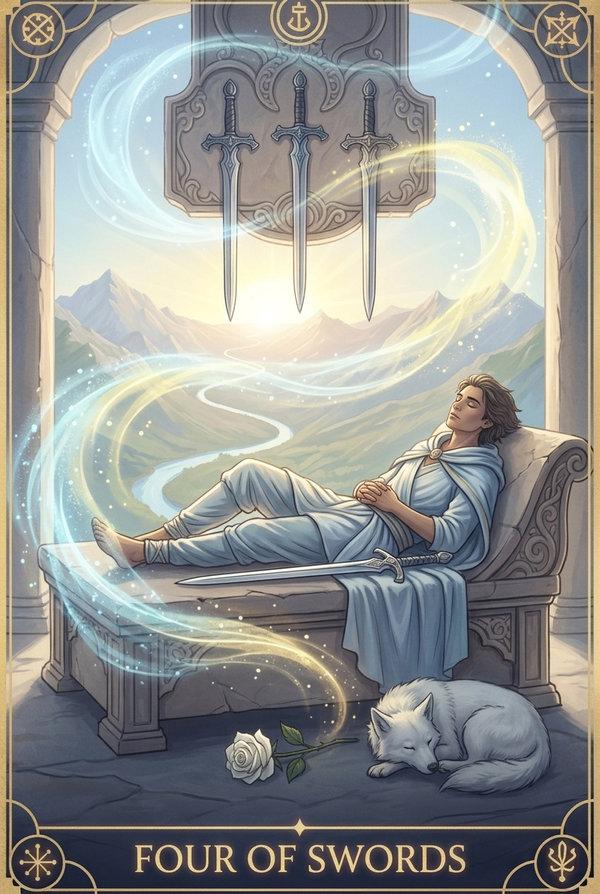
Minor Arcana • Swords
Four of Swords Tarot Meaning
In short
The Four of Swords is a Swords card. Upright, it calls for rest, recovery, and mental retreat, a pause in the battles so the nervous system and perspective can heal. Reversed, it warns of burnout from refusing rest, restless recovery, or returning to stress too soon. Honor slower pacing and true recovery.
Overview
The Four of Swords tarot meaning is rest, recovery, and deliberate mental retreat after strain. In the Rider-Waite-Smith image, an armored knight lies in tomb-like repose on a stone slab, hands pressed in prayer, with three swords mounted on the wall above him and a fourth carved beneath his body. A stained-glass window shows a figure offering peace, marking the space as sanctuary. As the 4 of Swords, it follows the raw pain of the previous card with the stillness needed before conflict resumes. Upright, it favors a sabbatical, hospital recovery, meditation, or pausing a dispute to regroup and heal the nervous system. Reversed, it warns of burnout from refusing to rest, restless recovery, or rushing back into stress before you are ready, and isolation that curdles into gloom. Either way, treat recovery as active repair, not weakness, and let solitude rebuild your strength.
Four of Swords Keywords
Use these themes as quick anchors when Four of Swords appears in a spread. Upright tags summarize the card's core message; reversed tags show the blocked or inverted form.
Upright Keywords
- rest
- recovery
- contemplation
- retreat
- mental renewal
Reversed Keywords
- restlessness
- refused rest
- burnout
- rushed recovery
- depleted reserves
Upright & Reversed
Upright Meaning
Four of Swords upright calls for rest, recovery, and a deliberate mental retreat. A knight lies in still repose beneath his swords, not defeated but pausing to heal before the next round. After a stressful stretch, this card gives you permission to stop, breathe, and let your nervous system settle. The rest here is chosen and restorative, not avoidance. In practice it looks like taking real time off, stepping back from a conflict instead of escalating it, sleeping properly, or spending a quiet week planning behind closed doors rather than fighting in public. Perspective returns when you stop straining for it. Set boundaries on messages and demands, protect your recovery, and trust that stepping away now makes you sharper later. Whether the strain came from work or a draining relationship, the answer is the same: pause on purpose. Ask what genuine recovery would look like, then actually give yourself that instead of powering through.
Reversed Meaning
Reversed, rest is refused, faked, or cut short, and the cost shows. You return to the fray before you have recovered, keep the notifications on during your supposed break, or push through exhaustion because slowing down feels like weakness. The result is burnout, restlessness, or a body and mind that will not settle no matter how tired you are. Sometimes the opposite appears: retreat has stretched into isolation, and rest has quietly become withdrawal or stagnation. In practice it looks like insomnia despite time off, snapping at people from sheer depletion, or hiding out so long that reentry feels impossible. Honor a slower pace before your body forces one on you. Take the recovery seriously this time, not cosmetically, and unplug for real. If you have hidden away too long, take one small step back toward connection. Sustainable pacing beats the martyrdom of grinding until you break.
Symbolism on the Card
- An armored knight lies flat in tomb-like repose atop a stone slab, an effigy of rest rather than death, signaling a deliberate pause.
- His hands are pressed together in prayer above his chest, a posture of meditation, contemplation, and inner quiet rather than active struggle.
- Three swords hang mounted on the wall above him, past conflicts set aside and consciously kept out of reach for now.
- A single fourth sword is carved along the side of his couch, the battle he still carries but has chosen not to wield.
- A stained-glass window glows in the upper corner, showing a figure and the word pax, framing the room as sanctuary and healing space.
- The cool, grey stone chapel setting reinforces silence, retreat, and the recuperative stillness the air suit rarely allows itself.
- His face is calm and eyes closed, the mind finally released from the racing thoughts that swords so often represent.
Deeper Meanings
Personality Type
Someone in a Four of Swords phase reads as calm, self-contained, and protective of their own peace, the type who steps back to recharge rather than run on fumes. They value stillness, guard their energy, and often give wise counsel because they have learned to pause before reacting. Reversed, the flaw shows as withdrawal that hardens into isolation, avoidance disguised as self-care, or the opposite extreme of refusing all rest until exhaustion forces the issue and the mind simply will not quiet down.
Spiritual Meaning
Spiritually the Four of Swords is a retreat, a deliberate turning inward to restore what busyness drained. The lesson is that stillness is not empty; it is where clarity and healing quietly gather. Reversed, growth stalls when you avoid the silence you actually need or hide from life under the banner of rest, so return, gently, to one grounding practice and let genuine quiet do its work.
Health & Wellness
For health the Four of Swords is a clear call for recovery, sleep, and letting the nervous system settle. Upright, this is a healing plateau where gentle care rebuilds more than pushing ever could. Reversed, ignoring the need to rest can tip into fatigue, tension, or burnout, so honor slower pacing and give the body real recovery time. Always seek professional care for any real concern.
Shadow Side
The shadow of the Four of Swords is retreat that becomes avoidance, using rest as an excuse to hide from decisions that still need you. It can also flip into a martyr-like refusal to ever stop. Reversed, watch for burnout from denying rest, or numbing out instead of genuinely recharging. Repair begins by resting on purpose, then re-entering life once you are truly restored, not fleeing it.
Timing
The Four of Swords points to a slow, still stretch with little sudden movement, a season built for recovery rather than action. Progress waits while you recharge, and forcing speed now works against you. Reversed, the delay is a signal you have skipped rest and stress is piling up, so the pace stays sluggish until you finally pause and let yourself recover properly.
Love & Career
In Love & Relationships
Upright
This is a season for rest rather than pursuit: pausing dating to heal, or a couple taking calm space to reset without drama. Sleeping apart or slowing contact is maintenance, not punishment. Let the nervous system settle before any big talk. Quiet now protects the bond and returns you to each other with clearer, gentler perspective.
Reversed
Silence stretches too long and starts to feel like avoidance, or one partner is ready to reconnect while the other still needs time. Negotiate the pace openly. Refusing any rest breeds resentment, so honor recovery, then return to the conversation instead of ending it in exhaustion.
Career & Finances
Upright
A pause is due, whether vacation, medical leave, a gap between jobs, or a strategic breather before a launch. Do not mistake this recovery for laziness, because it is how you rebuild focus. Step back, let the mind quiet, and you return sharper. Sustainable pacing now prevents the collapse that overwork guarantees later.
Reversed
Refusing to rest tips into burnout, or a layoff forces the break you kept resisting. Restlessness makes recovery hard. Use the downtime deliberately rather than filling it with dread, and rebuild a slower rhythm before returning to pressure too soon.
As Feelings
The Four of Swords feels like the body and mind asking for quiet after a long fight. Emotionally it is less numb than resting: a needed retreat, a lowering of the guard, permission to stop bracing. You may feel tired but calmer, ready to withdraw and let your nervous system reset, with peace in the pause. Reversed, the feeling shifts to burnout or restlessness, the buzz of a mind that cannot switch off, or guilt about resting. Reversed can also mean stepping back into stress too soon, before you have truly recovered.
Yes or No
Not right now, and that is not a rejection but a pause. The Four of Swords asks you to rest and recover before acting, so an immediate yes would be premature. Wait until you are restored. Reversed, the warning sharpens: if you have been refusing rest, forcing a yes now risks burnout, so recover fully first and the answer becomes far clearer.
General Advice
Treat rest as strategy, not weakness. First, block out genuine downtime and protect it like an appointment you cannot cancel. Second, quiet the mental noise with sleep, silence, or one calming ritual before you plan your next move. Third, say no to a single nonessential demand so recovery has room to happen. You cannot think clearly or fight well from an empty tank, so refill it first.