Tarot Yes or No Guide
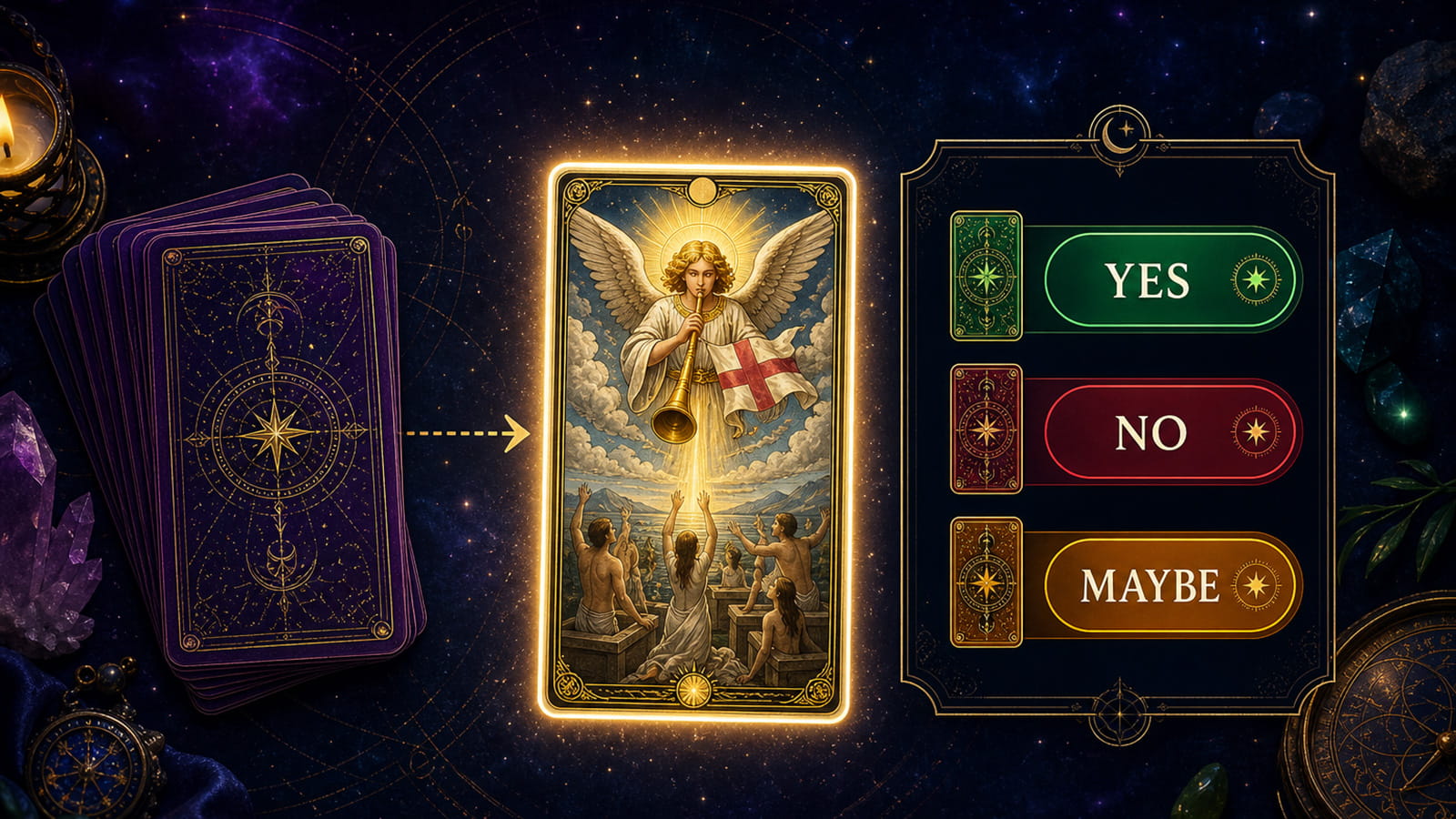
Yes or no tarot readings are popular because they feel direct, but tarot rarely gives a simple button to push. Cards speak in symbols, and the best yes/no answers combine the card's core energy with your question, position, and whether the card is upright or reversed. This guide explains how to interpret one-card yes/no pulls with clarity, when to read an answer as maybe, and how to use Astrologylo's free tool alongside full card meanings. Try our free Yes or No tarot reading for an instant one-card answer.
Can tarot answer yes or no questions?
Yes, tarot can clarify leaning, timing, and conditions, but treat answers as guidance, not guarantees. A yes may mean yes if you act. A no may mean not yet or not this way. On Astrologylo, you can draw one card for Yes, No, or Maybe after framing your question. Every card page also includes a dedicated Yes or No section you can reference quickly, plus upright and reversed meanings for full context.
Yes/no tarot works best for focused decisions: timing a conversation, checking alignment before a commitment, or sensing whether patience is wiser than action. It is less reliable for medical, legal, or financial outcomes that require professional advice.
The yes, no, and maybe framework
Most readers sort a single card into three buckets before adding nuance:
- Yes: momentum, openness, support, or green-light energy. The path is available if you show up.
- No: blockage, misalignment, exhaustion, or a clear stop signal. Often a redirect, not a permanent rejection.
- Maybe / conditional: mixed signals, hidden factors, or timing that is not settled. Wait, gather information, or refine the question.
Our Yes or No tool applies this framework automatically from each card's upright or reversed meaning, then links you to the full card page for deeper reading.
Quick yes/no tendencies by energy
These are starting points, not rigid rules. Always read the full card meaning and your question context:
- Yes-leaning: The Sun, The Star, Ace of Wands, Nine of Cups, Ten of Pentacles, Six of Wands
- No-leaning: The Tower, The Devil, Ten of Swords, Five of Pentacles, Five of Cups
- Maybe / conditional: The Fool, The Moon, Seven of Cups, Two of Pentacles, The Hanged Man
Example yes/no readings on three cards
Question: Should I accept this opportunity now?
The Sun upright: Strong yes. Visibility, confidence, and honest outcomes. Conditions look favorable if you act with transparency.
The Tower upright: Leaning no or not in this form. Something unstable may need to break before a healthier yes appears. Consider what you are forcing.
The Moon upright: Maybe. Facts may be incomplete or emotions are clouding judgment. Sleep on it, verify details, then pull again in a few days.
For love questions, pair the yes/no section with As Feelings on the same card page. For money or career, check suit context: Pentacles for work and finances, Wands for initiative.
Upright vs reversed in yes/no readings
Upright cards usually express their primary message openly. Reversed cards may soften, delay, or internalize the theme. A yes card reversed can become not now or yes with conditions, while a challenging card reversed can mean release from a problem or lessons learned. Always read the full upright and reversed meanings on the card page before deciding. If you use our tool, reversed pulls are labeled automatically so you can compare both tones side by side.
Ask better yes/no questions
Vague questions produce vague cards. Instead of Will I get the job? try:
- Is this job aligned with my long-term growth?
- What should I understand before saying yes?
- Is now the right time to apply?
- Should I reach out to them this week?
- Is this investment aligned for me right now?
Better questions produce richer answers, even in a one-card pull. If the answer is maybe, ask a follow-up that names the condition: What do I need to clarify first?
Common yes/no tarot mistakes
- Repeating until you get yes: Treat the first clear pull as the message unless your situation materially changes.
- Ignoring reversed context: A reversed yes card is rarely a hard no; it often signals delay or inner work first.
- Skipping the full meaning: The yes/no line is a headline. Read upright, reversed, and love or career sections for nuance.
- Replacing professional advice: Tarot supports reflection; it does not diagnose health or replace legal or financial counsel.
Simple one-card yes/no method
- Take a breath and phrase one clear question (avoid double questions).
- Shuffle while focusing on that question, or use our online Yes or No tool.
- Draw one card and open its Astrologylo page.
- Read the Yes or No section first, then upright/reversed for context.
- Check As Feelings if the question involves a person.
- Journal one sentence: what action or pause does this suggest?
Practice on Astrologylo
For a single clear answer, use our free Yes or No tarot tool. Draw three cards with our Past · Present · Future spread, then open any card for full meanings. New to tarot? Start with the 78-card tarot library or read our guide to Major vs Minor Arcana. Explore suit guides: Cups for love, Pentacles for money, Wands for action, and Swords for decisions and communication.
Try a free tarot reading
Put this guide into practice: draw a card, read upright and reversed meanings, and explore all 78 tarot cards on Astrologylo.