Major Arcana
Death Tarot Meaning
Browse all Major Arcana cards →
In short
Death is the tarot card of endings, transformation, and renewal, rarely literal. Upright it means a necessary ending that clears real space for rebirth; reversed it warns of clinging to what is already over, stagnation, and resisting an inevitable, needed change.
Overview
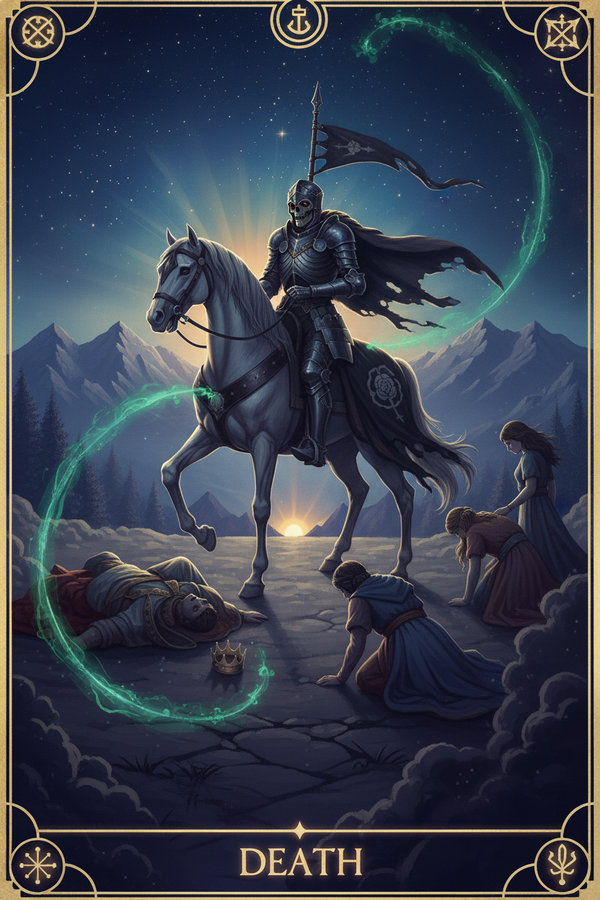
Death tarot meaning is endings, transformation, and renewal, and it is rarely literal. In the Rider-Waite-Smith image a skeletal knight in black armor rides slowly on a white horse, carrying a black banner emblazoned with a white five-petaled rose, a sign of purity and life persisting through change. A bishop, a maiden, and a child meet him in the foreground, showing that every rank crosses the same threshold, while a fallen king lies beneath the hooves. Between two distant towers the sun rises, so each ending opens a new day. Following the Hanged Man's surrender, Death clears the old season of jobs, habits, beliefs, and relationships so authentic growth can begin. In readings expect moves, breakups, rebrands, detoxes, and rebirth. Upright it means a necessary ending that clears space for something aligned with who you are becoming; reversed it warns of clinging to what is already over and resisting inevitable change.
Death Keywords
Use these themes as quick anchors when Death appears in a spread. Upright tags summarize the card's core message; reversed tags show the blocked or inverted form.
Upright Keywords
- transformation
- endings
- renewal
- transition
- release
- rebirth
Reversed Keywords
- resisted change
- clinging
- stagnation
- denial
- delayed endings
- fear
Upright & Reversed
Upright Meaning
Death meaning upright is about endings, transformation, and the renewal that follows honest closure. It rarely indicates literal physical death and should not be read as a prediction of it. Instead, a chapter has reached its natural limit: a role, habit, belief, routine, identity, or connection can no longer continue in its old form. The transition may bring grief even when it is necessary. You might leave a stale job, clear belongings tied to a former life, end a damaging pattern, or accept that an earlier version of your plan is over. The skeletal rider moves forward without bargaining, while the rising sun promises that life continues beyond the ending. Trying to preserve everything prevents new growth from taking root. Let yourself acknowledge what mattered before releasing it. Close practical loose ends, allow emotions their proper time, and make space for the next season without demanding that renewal appear immediately.
Reversed Meaning
Death reversed points to resisted transformation, delayed closure, or an ending that is occurring inwardly before it becomes visible. You may know that a situation is finished but keep reviving it through habit, nostalgia, fear, or the hope that nothing must change. Sometimes the transition is already underway, yet you are carrying an expired identity into every new choice. This resistance can create a long, uncomfortable middle ground: the old structure no longer works, while the new one cannot develop. A stalled resignation, repeated return to an unhealthy routine, or refusal to clear unfinished business may reflect this pattern. The card does not demand reckless destruction or an abrupt exit. It asks for honest recognition of what has run its course. Grieve what you are losing, separate useful lessons from dead weight, and begin a gradual release. One clear ending can restore movement and make renewal possible.
Symbolism on the Card
- A skeletal knight in black armor rides slowly on a pale white horse, transformation approaching with quiet inevitability rather than gore.
- A black banner bearing a white five-petaled rose signals purity and a life that continues on through every change.
- A bishop, a maiden, and a child meet the rider in the foreground, every rank crossing the same threshold together.
- A fallen king lies crushed beneath the horse's hooves, showing that even the proudest structures must eventually yield.
- Between two distant towers the sun rises on the horizon, so each ending opens the door onto a new day.
- A small boat drifts on the river behind, echoing the soul's timeless passage from one shore across to the next.
- The rising sun and the flowing river together promise renewal beyond loss, reframing the grim rider as a necessary passage rather than a final end.
Deeper Meanings
Personality Type
A Death personality embraces transformation: unafraid to end chapters, shed old identities, and reinvent themselves when a phase has run its course. They understand deep down that change is growth and rarely fear necessary endings, which gives them a striking capacity for renewal. Reversed, that same person clings, dreads endings, or stays in dead situations long past their time, holding on to people, jobs, or beliefs out of fear even as they slowly drain the life out of them.
Spiritual Meaning
Spiritually, Death is rebirth and the sacred cycle of release and renewal, teaching that endings are initiations rather than tragedies. Every closing door opens onto a deeper, truer phase of the journey when you allow it. Reversed, it points to resisting transformation or fearing the unknown waiting on the other side, so growth stalls while you cling to a version of yourself that is already passing away.
Health & Wellness
For health, Death points to deep change: ending harmful habits, embracing a recovery that asks for real transformation, or committing to a major reset in how you live. Letting go of old patterns can genuinely renew you. Reversed, resisting necessary change or clinging to comfortable but draining routines tends to prolong the struggle, so gently release the old approach and seek qualified support where it helps.
Shadow Side
The shadow of Death is clinging: refusing to let go of people, identities, or phases that are already finished, and keeping them alive out of fear rather than love. It can also flip into a destructive love of endings for their own sake, burning things down needlessly. Growth means letting what is genuinely dying actually die, so you stop guarding graves and finally free yourself for the rebirth waiting behind the ending.
Timing
Death signals an ending that is already underway and will complete in its own time, often marking the close of a long, significant cycle rather than a quick change. The transformation moves at its own pace and cannot be forced. Reversed, the transition drags out uncomfortably because you keep resisting the letting go, so the ending only finishes once you finally stop holding on and allow it to complete.
Love & Career
In Love & Relationships
Upright
A genuine transformation moves the relationship forward. This card marks the end of one chapter and the honest closure that heals: releasing old patterns, outgrown dynamics, or a bond that has run its course. Single, letting go of the past frees you for something truer. Partnered, deep change renews intimacy. Endings here clear space for something better.
Reversed
Clinging to what is already over prolongs the pain: staying in an expired relationship, resisting change, or fearing the closure you know is coming. Transformation still knocks. Allow a gradual release rather than dramatic denial, and trust that letting go, while hard, opens the door to healing.
Career & Finances
Upright
Endings create space for a better fit. This card supports leaving an outdated role, restructuring a business, or pivoting to a new field. Something has run its course, and releasing it lets fresh energy move. Do not fear the transition. Honest closure on what no longer works clears the way for more aligned, rewarding work ahead.
Reversed
Clinging to a dead-end role or outdated way of working keeps you stuck. You resist a change that is clearly needed, and the discomfort only grows. Transformation is overdue. Allow a gradual, deliberate release rather than denial, and take the first step toward the fresh start you know is coming.
As Feelings
As feelings, Death marks a profound shift: an old feeling is dying so a truer one can emerge, or someone senses the relationship transforming completely into something it was not before. Endings here make room for honesty rather than simply loss. Upright, the emotion is a necessary release that clears the air. Reversed, feelings cling stubbornly to the past, resisting a closure that clearly needs to happen, so someone keeps a dead dynamic on life support instead of letting it end and freeing space for what is real.
Yes or No
Maybe, with the clear understanding that something must end before anything new can begin. Death says yes to transformation and no to keeping things exactly as they are, so the answer depends entirely on your willingness to let go. Reversed, it leans toward no: clinging to what is already finished blocks the change, so nothing moves until you stop resisting the ending that is trying to happen.
General Advice
Honor what has ended instead of dragging it back to life. Take three steps: name clearly what is genuinely over, grieve it honestly rather than pretending you are fine, and resist the urge to resurrect it from nostalgia when it resurfaces. Grief is a form of respect, and renewal follows naturally once you stop clinging, so make room for the new by fully releasing the old.